

Main Physical and Chemical Properties of Tin

Abstract
Tin (Sn) is a silvery-white metal widely used in industry and daily life due to its excellent ductility and corrosion resistance. With a relatively low melting point of about 232°C, tin is easily formable and represents a typical flexible material. Chemically, tin resists corrosion in air but can react with acids and bases to form tin compounds. In alloys, tin is commonly used as a coating material and solder. Its unique physical and chemical properties make tin highly valuable in electronics, packaging, and the automotive industry.
- Physical Properties of Tin
1.1 Basic Characteristics
1.1.1 Appearance and Structure
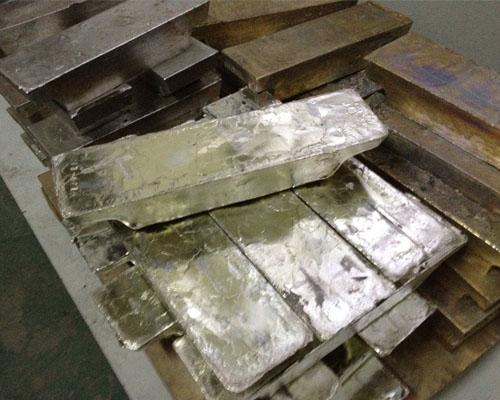
Tin exhibits a silvery-white metallic luster. Its crystalline structure is tetragonal, which imparts good plasticity.
1.1.2 Density and Melting/Boiling Points
Tin has a density of 7.31 g/cm³, a melting point of 232°C, and a boiling point of 2602°C. These characteristics make tin an easily fusible metal suitable for low-temperature soldering and coating applications.
1.1.3 Ductility
Tin possesses good ductility, allowing it to be drawn into fine wires or rolled into thin sheets. It can be readily cold worked via bending and rolling in manufacturing processes.
1.2 Acoustic and Thermal Properties
1.2.1 Thermal Conductivity and Expansion
Tin has moderate thermal conductivity and, as a flexible metal, is effective in preventing structural deformation caused by thermal expansion, excelling in coating and packaging materials.
1.2.2 Sound Velocity and Damping
The speed of sound in tin is relatively low, creating unique conditions for its application in vibration damping and acoustic structures.
- Chemical Properties of Tin
2.1 Chemical Behavior
2.1.1 Main Oxidation States
Tin commonly exhibits +2 and +4 oxidation states. Oxidizing agents can produce tin dioxide (SnO₂), an important chemical raw material and photoelectrocatalyst.
2.1.2 Passivation and Corrosion Resistance
Tin naturally forms a protective oxide layer in air, preventing further corrosion. This passivation makes it widely used in food packaging to maintain long-term quality stability.
2.2 Compounds and Reactivity
2.2.1 Tin Dioxide (SnO₂)
Used in gas sensors, photoelectric devices, and as a key component in ceramic glazes. Its chemical stability and transparency make it popular in high-end product manufacturing.
2.2.2 Tin Hydroxide (Sn(OH)₂) and Other Compounds
Tin hydroxides react with alkaline substances and find extensive use in chemical synthesis and battery anode materials.
2.2.3 Alloy Reactivity
Tin readily alloys with metals such as copper and lead, enhancing the flexibility and corrosion resistance of the resulting alloys.
- Applications of Tin
3.1 Electronics Industry
3.1.1 Soldering and Coating Materials
Tin is extensively employed as solder in electronic products, especially on circuit boards. Its alloys with lead have formed classic solder materials, offering excellent conductivity and stability.
3.1.2 Semiconductor Applications
Tin dioxide is a key material in transparent conductive oxide (TCO) technology, crucial for modern displays and photovoltaic cells.
3.2 Materials Industry and Manufacturing
3.2.1 Packaging Materials
Tin’s corrosion resistance makes it ideal for coating food cans, providing excellent solutions for long-term food storage.
3.2.2 Coatings and Protection
Tin coatings on steel provide abrasion resistance and are widely used in automotive and construction materials.
3.3 Chemical and Pharmaceutical Applications
3.3.1 Catalysts
Due to its chemical stability, tin compounds serve as catalysts in organic synthesis and environmental treatment processes.
3.3.2 Pharmaceutical Additives
Tin’s antibacterial properties lead to its compounds being widely used in pharmaceutical packaging and medical device manufacturing.
- Resources and Extraction of Tin
4.1 Distribution and Mining
Major tin deposits are found in China, India, and Indonesia. Tin ores are primarily cassiterite (SnO₂), requiring smelting and refining processes.
4.2 Environmental Impact and Management
Tin mining and smelting involve high energy consumption and environmental risks. Technological advancements focus on recycling waste materials and reducing pollution to achieve sustainability goals.
- Future Development and Trends
5.1 New Technologies and Application Expansion
With the trend toward thinner and more flexible electronic products, tin’s potential in transparent conductive materials is significant, expected to further drive innovation in consumer electronics.
5.2 Environmental Protection and Sustainability
New recycling technologies for tin will further reduce environmental burdens of extraction. The tin industry needs to strengthen partnerships to promote ecological management and circular economy practices.
Conclusion
Tin, as an important industrial metal, plays a critical role across various fields due to its excellent physical and chemical properties. It provides irreplaceable functionality and performance support in electronics, materials chemistry, and packaging industries. With technological progress, expanding innovative applications will continue to drive tin’s market demand, while sustainable resource management and environmental governance will ensure the healthy development of the tin sector. Through global cooperation and technological innovation, tin will maintain its indispensable role in modern industry.
