

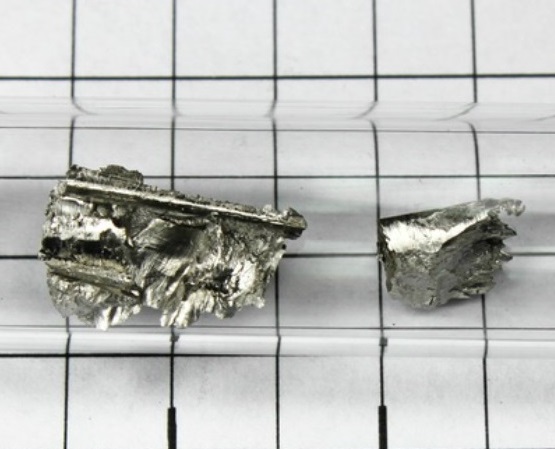
Main Applications of Praseodymium-Neodymium Alloys in Magnetic Materials

Abstract
Praseodymium-neodymium (Pr-Nd) alloys have extensive and important applications in magnetic materials, particularly in the field of high-performance permanent magnets. Due to their superior magnetic properties, including high coercivity and remanence, Pr-Nd alloys are widely used in the manufacture of permanent magnet motors, speakers, wind turbines, and electronic products. These magnetic materials provide indispensable support for the development of modern industry and technology. Furthermore, with technological progress, Pr-Nd alloys are gradually being developed for use in magnetic refrigeration materials and green energy applications, demonstrating significant growth potential.
1.Basic Characteristics of Praseodymium-Neodymium Alloys
1.1 Chemical Composition and Structure
1.1.1 Composition and Structure
Pr-Nd alloys generally consist of the two rare earth elements praseodymium (Pr) and neodymium (Nd), both relatively scarce in nature. Neodymium is a strongly magnetic element, while praseodymium enhances the magnetism and thermal stability of neodymium. These alloys are formed by combining praseodymium and neodymium with other metals such as iron and boron to produce composite materials with excellent magnetic properties.
1.1.2 Manufacturing Process
The production of Pr-Nd alloys involves smelting, heat treatment, and mechanical processing. Precise control of the alloy composition is required to optimize magnetic performance, and the alloy structure is adjusted according to specific application needs.
1.2 Physical and Chemical Properties
1.2.1 Magnetic Properties
Strong magnetism is the core characteristic of Pr-Nd alloys, primarily manifested as high coercivity and high remanence. These properties ensure stable magnetic performance under demanding conditions.
1.2.2 Thermal Stability
The alloys exhibit good thermal stability, maintaining magnetic properties over a wide temperature range. This provides stability under varying environmental conditions and advantages in high-temperature applications.
1.3 Mechanical Properties
1.3.1 Hardness and Strength
Pr-Nd alloys have relatively high hardness and mechanical strength, enabling them to withstand significant pressure and deformation, making them suitable for environments involving mechanical stresses.
1.3.2 Machinability
Although the alloys are relatively hard, proper processing allows them to meet specific shape and functional requirements, including cutting and surface treatment.
2.Applications of Praseodymium-Neodymium Alloys in Magnetic Materials
2.1 Permanent Magnet Motors
2.1.1 Basic Principle
Permanent magnet motors operate by harnessing strong magnetic fields generated by magnetic materials to drive rotor rotation. Pr-Nd alloys provide sustained power support due to their high magnetic flux density and stable temperature coefficient.
2.1.2 Application Examples
Permanent magnet motors are widely used in electric vehicles and hybrid vehicles for their high energy efficiency and long service life. They also demonstrate excellent performance in industrial robots, drones, household appliances, and other fields.
2.2 Electronic Products and Speakers
2.2.1 Magnetic Vibration Guidance
In speakers, Pr-Nd alloys generate precisely controlled magnetic field variations that govern diaphragm movement, achieving high-fidelity sound quality. Their high magnetic strength and stability enhance the performance of electronic products.
2.2.2 Sensors and Electronic Devices
In sensor applications, the precise magnetic field modulation provided by Pr-Nd alloys improves device sensitivity and accuracy. They are suitable for smartphones, digital cameras, and other electronic devices requiring precise control and durability.
2.3 Wind Power Generation
2.3.1 Kinetic Energy Conversion Efficiency
Wind turbines use wind to drive rotor rotation and convert kinetic energy into electrical energy via high-performance permanent magnets made from Pr-Nd alloys. This highly efficient conversion process is critical in modern renewable energy development.
2.3.2 Environmental and Sustainability Benefits
Due to the strong magnetism and durability of Pr-Nd alloys, the use of permanent magnets in wind power generation effectively reduces maintenance costs and further promotes environmentally friendly energy production.
2.4 Magnetic Refrigeration Technology
2.4.1 Magnetocaloric Effect
As an innovative cooling technology, magnetic refrigeration exploits the magnetocaloric effect of magnetic materials to achieve cooling. The application of Pr-Nd alloys in this field is based on their excellent magnetic properties and thermal stability, making them a green and environmentally friendly alternative.
2.4.2 Potential Application Areas
Magnetic refrigeration technology has attracted widespread attention and is applicable to refrigeration equipment, medical cold storage, and other fields, as it avoids the environmental problems caused by conventional refrigerants.
3.Technological Advances and Future Development
3.1 New Material Research
Research on Pr-Nd alloys continues to optimize material composition and structure to improve magnetic performance and thermal stability. Combining with other rare earth elements and metals, as well as applying nanotechnology, may further enhance material properties.
3.2 Environmental Protection and Sustainability
With the growing global demand for sustainable materials, research focuses on the recycling and environmental impact of Pr-Nd alloys during processing. Innovative manufacturing and recycling technologies are vital to reducing environmental impact throughout production.
3.3 Application Expansion
In the future, applications of Pr-Nd alloys in magnetic materials will further expand into new fields, including aerospace, defense technology, and broader industrial applications, integrating with smart manufacturing and advanced electronic systems to provide more comprehensive solutions.
Conclusion
Praseodymium-neodymium alloys, owing to their excellent magnetic properties, thermal stability, and mechanical performance, have become essential foundational materials in numerous modern industrial and technological fields. Through continuous optimization and technological innovation, these alloys maintain advantages in permanent magnet motors, electronic products, wind power generation, and demonstrate great potential in magnetic refrigeration and high-tech sectors. Driven by technological progress and environmental requirements, Pr-Nd alloys will continue to advance the development and application of magnetic materials, providing sustainable solutions in the future.
