

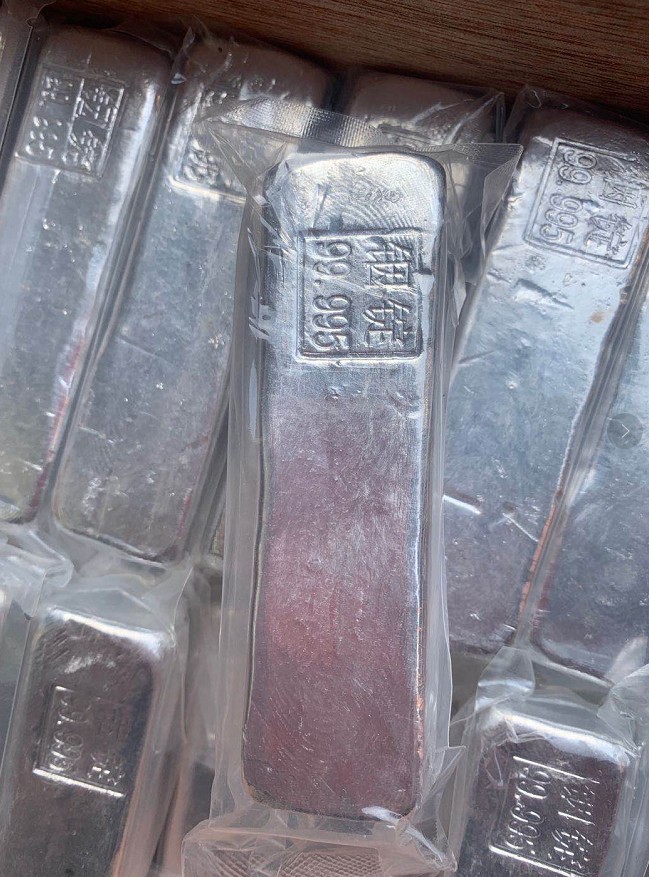
Current Market Demand for Indium: Key Industries and Future Demand Forecast in Emerging Technologies such as Semiconductors and Solar Cells

Abstract
The current demand for indium is primarily concentrated in three major sectors: flat panel displays (ITO targets accounting for 75%), semiconductors (compound semiconductors accounting for 12%), and photovoltaic cells (CIGS thin-film cells accounting for 8%). Over the next five years, the widespread adoption of Micro LED and quantum dot display technologies is expected to drive an annual growth rate of 4–6% in ITO target demand; third-generation semiconductors (GaN, InP) will increase indium demand by approximately 15% annually; and the promotion of perovskite/CIGS tandem solar cells could potentially double the indium demand in photovoltaics. Global indium consumption is projected to reach 2,800 tons by 2028 (compared to about 1,900 tons in 2023), with a supply deficit potentially expanding to 300 tons per year, resulting in heightened price volatility.
- Current Market Supply and Demand Structure of Indium
1.1 End-Use Distribution
- Dominance of flat panel displays: ITO (indium tin oxide) targets constitute 75% of total indium consumption, used in LCD and OLED panels (a 65-inch TV requires approximately 1.5 grams of indium). In 2023, global panel production capacity reached 350 million square meters, corresponding to an indium demand of about 1,400 tons. Emerging display technologies such as quantum dot QLED and Micro LED are driving higher resolution ITO demand, increasing indium usage per unit area by 10–20%.
- Semiconductor and photovoltaic supplemental demand: Compound semiconductors (InP, GaInAs) account for 12%, with 5G base stations and optical modules requiring InP substrates (0.2 grams of indium per base station), totaling approximately 230 tons in 2023; CIGS thin-film solar cells represent 8%, requiring 18 tons of indium per GW installed capacity, with global annual installations of 2.5 GW corresponding to 45 tons of indium demand.
- Other sectors: Solder/alloy applications (3%), nuclear medicine (2%), and other niche uses collectively account for less than 5%.
1.2 Supply Structure Risks
- Primary indium sources: Global annual production is approximately 1,700 tons (2023), with China contributing 55% (as a by-product of zinc refining), South Korea 20%, and Canada 15%, relying on imported crude indium for refining.
- Recycling rate bottleneck: ITO scrap recycling rates are only 30–40% due to indium volatilization during high-temperature sintering; semiconductor waste recycling technologies remain immature, with secondary indium supply below 20%.
- Demand Growth Drivers in Emerging Technologies
2.1 Display Technology Upgrades
- High resolution and flexibility: 8K/10K panels require ITO film resistivity below 1.5×10⁻⁴ Ω·cm; indium purity must increase from 99.99% to 99.999%, raising indium usage per screen to 2 grams (65-inch). Foldable OLEDs employ ultra-thin ITO (<50 nm), with decreased sputtering efficiency increasing target consumption by 30%.
- Micro LED mass production: Massive transfer technology demands high-precision ITO electrodes (line width <5 μm); by 2028, Micro LED panel indium demand may reach 200 tons annually (CAGR 50%).
2.2 Third-Generation Semiconductor Boom
- 5G/6G communications: InP substrates are used for millimeter-wave devices above 28 GHz (6-inch wafers consume 15 kg of indium per 10,000 wafers); with over 25 million base stations expected by 2028, indium demand could reach 400 tons.
- Photonic integrated circuits: InGaAs detectors on silicon photonics chips contain 0.1 mg indium per chip; AI-driven computing power growth pushes the optical module market to $20 billion, corresponding to an indium demand of 60 tons annually.
2.3 Photovoltaic Technology Iteration
- Perovskite/CIGS tandem cells: With conversion efficiencies surpassing 30%, indium layer thickness increases from 0.5 μm to 1.2 μm, raising indium demand from 18 to 40 tons per GW; if 50 GW of tandem cells are installed by 2030, indium demand would be approximately 2,000 tons.
- Thin-film solar cell resurgence: Building-integrated photovoltaics (BIPV) favor lightweight CIGS modules, with European market growth at 30% annually, potentially contributing 150 tons of indium demand by 2028.
- Supply-Demand Balance and Price Trend Forecast
3.1 Demand Growth Models
- Baseline scenario (steady technological development): Indium demand CAGR of 6.5% from 2023 to 2028, reaching 2,600 tons by 2028; with display sector share declining to 68%, semiconductor rising to 18%, and photovoltaics at 12%.
- Aggressive scenario (accelerated commercialization of tandem cells): Photovoltaic indium share jumps to 25%, total demand exceeds 2,800 tons, supply deficit expands to 300 tons, necessitating construction of five additional refining plants with 60 tons annual capacity each.
3.2 Supply Capacity Constraints
- Zinc ore co-production limits: As indium is a by-product of zinc refining, global zinc ore production grows only 2% annually, capping primary indium supply at approximately 2,000 tons per year.
- Recycling technology breakthroughs: Adoption of ionic liquid extraction (recovery rate >85%) could increase recycled indium supply to 500 tons annually by 2030, mitigating 20% of the supply gap.
3.3 Price Volatility Analysis
- Short-term fluctuations (2024–2026): Inventory adjustments in the display industry (panel manufacturers reducing inventory turnover days from 45 to 30) may cause indium prices to fluctuate between $400 and $600 per kilogram.
- Long-term upward pressure (2027–2030): Combined demand from photovoltaics and semiconductors may drive indium prices above $800 per kilogram, incentivizing development of non-traditional sources such as deep-sea manganese nodules.
- Strategic Recommendations for the Industry Chain
4.1 Resource Security Measures
- Strategic reserves: Major consuming countries (China, Japan, South Korea) should establish indium reserves covering at least six months of demand to stabilize price fluctuations.
- Diversification of supply: Investments in emerging indium resource countries such as Bolivia and Russia to reduce dependence on Chinese supply chains (currently 70% import share).
4.2 Technological Substitution Pathways
- ITO alternative materials: Development of graphene/silver nanowire transparent electrodes with costs within 1.5 times that of ITO could reduce indium dependence by 10–15%.
- Reduced indium content in thin-film cells: Development of Sb₂Se₃ and other indium-free absorber layers; however, efficiencies (<15%) currently limit substitution for CIGS.
4.3 Circular Economy Enhancement
- Closed-loop recycling systems: Establishing indium recovery workshops within panel manufacturing plants to increase recycling rates to 60%; recycled indium costs 30% less than primary indium.
- Standardized design: Promoting modular design of indium content in semiconductor devices to facilitate centralized recycling of retired products.
Conclusion
Indium demand remains primarily driven by the display industry, but emerging applications in semiconductors and photovoltaics are reshaping the demand structure. Over the next five years, indium consumption may increase by 47%, with supply deficits potentially pushing prices to historic highs. The industry must address challenges via technological substitution, enhanced recycling, and diversified resource sourcing, while closely monitoring the nonlinear demand growth driven by disruptive technologies such as perovskite/CIGS tandem solar cells.
