

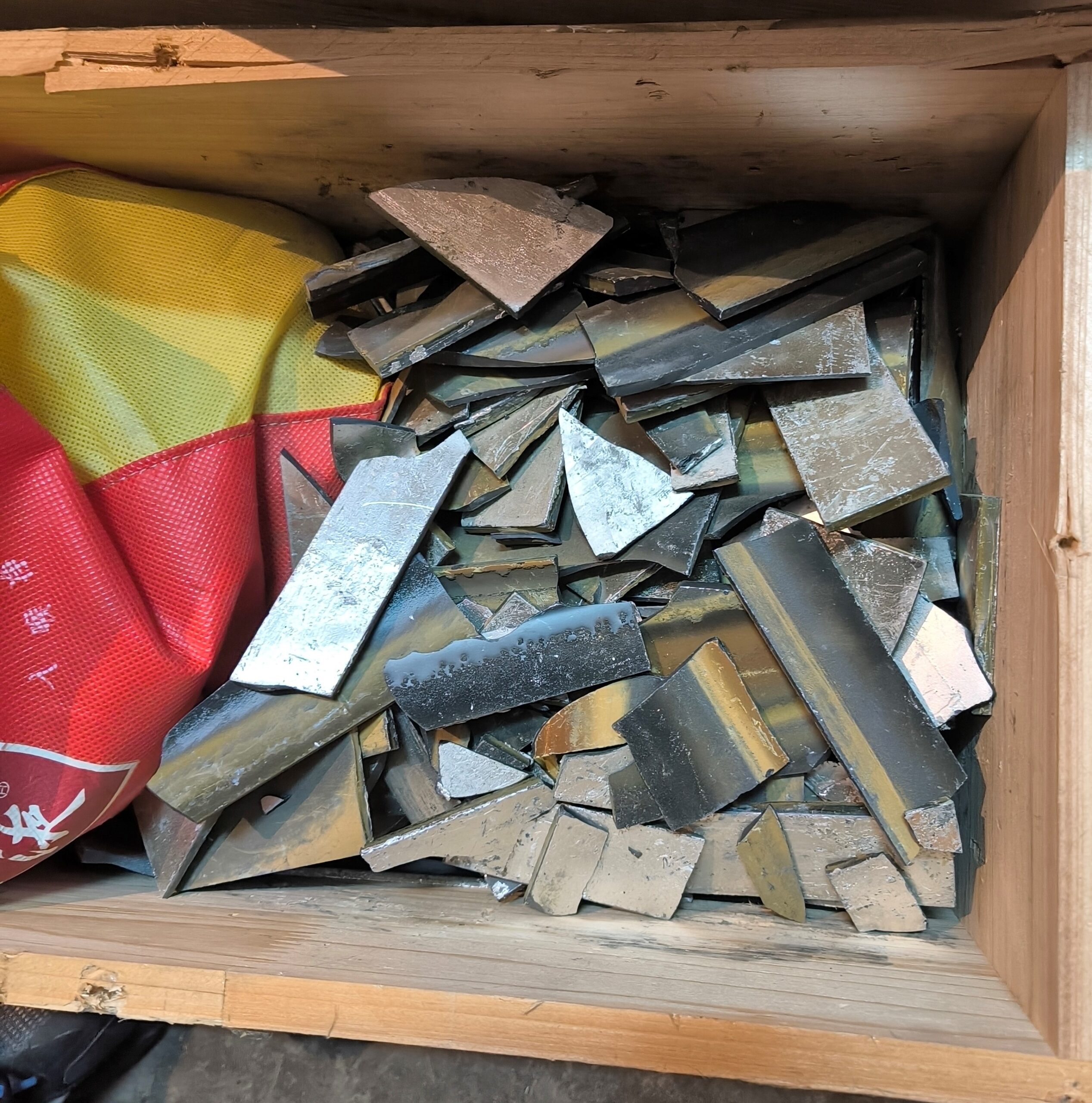
Effect of ITO Target Density (e.g., ≥99% Theoretical Density) on Film Uniformity and Conductivity, and Methods for Assessing Its Densification

Abstract
The densification level of indium tin oxide (ITO) targets (≥99% theoretical density) significantly influences the uniformity and electrical conductivity of sputtered films. High-density targets (7.1–7.2 g/cm³) reduce particle spattering during sputtering, improving film thickness uniformity (±3%) by 2.7 times compared to conventional targets (±8%), and achieving a low resistivity down to 1.5×10⁻⁴ Ω·cm. The densification degree is comprehensively evaluated by Archimedes’ method, metallographic microscopy (porosity <0.5%), and ultrasonic wave velocity measurements (≥4500 m/s). Optimized hot isostatic pressing (HIP) processes (1200°C, 150 MPa) effectively eliminate closed pores and enhance target performance.
- Correlation Mechanism between ITO Target Density and Film Performance
1.1 Influence of Density on Sputtering Stability
- Film uniformity: High-density targets (≥99% theoretical density) exhibit a dense microstructure with uniform grain size (5–10 μm), stabilizing plasma distribution during sputtering and reducing film thickness variation from ±8% to ±3%.
- Low-density targets (<95% theoretical density) contain internal pores (pore size >5 μm) that cause localized arc discharges, increasing pinhole density in films (>50/cm²).
1.2 Electrical Conductivity Transfer
- In high-density targets, In₂O₃ and SnO₂ phases are uniformly distributed (SnO₂ 10 wt.%), carrier mobility increases to 45 cm²/(V·s), and film resistivity is as low as 1.5×10⁻⁴ Ω·cm.
- Low-density targets suffer from grain boundary resistance due to electron scattering at pores, resulting in increased resistivity up to 3.0×10⁻⁴ Ω·cm.
1.3 Thermo-Mechanical Coupling Effects
- Thermal conductivity increases from 12 W/(m·K) to 18 W/(m·K) at densities ≥99%, reducing heat accumulation during sputtering and decreasing target surface cracking rate by 70%.
- Dense targets exhibit higher fracture toughness (K_IC) of 2.5 MPa·m^½, 39% higher than conventional targets (1.8 MPa·m^½), extending target service life to 2000 kWh.
- Methods for Assessing Densification
2.1 Physical Density Measurement
- Archimedes’ method: Following ASTM B962 standard, apparent density is measured using deionized water as medium, calculating relative density (measured density/theoretical density × 100%) with ±0.2% accuracy.
- Theoretical density: For ITO (90% In₂O₃ – 10% SnO₂), theoretical density is 7.18 g/cm³; measured density ≥7.1 g/cm³ is considered acceptable.
2.2 Microstructural Analysis
- Metallographic microscopy: Polished cross-sections etched with 5% HCl observed under optical microscope (500×) reveal porosity <0.5% and closed pore size <2 μm.
- Scanning electron microscopy (SEM): Backscattered electron imaging (BSE) shows Sn element segregation areas <1% of surface area; energy dispersive spectroscopy (EDS) line scans confirm compositional fluctuations within ±0.5 wt.%.
2.3 Ultrasonic Testing
- Correlation between sound velocity and density: Longitudinal wave velocity positively correlates with density; dense targets exhibit sound velocity ≥4500 m/s (10 MHz probe); porosity increase by 1% causes ~80 m/s velocity decrease.
- Defect localization: Phased array ultrasonic testing (PAUT) detects closed pores or cracks larger than 100 μm with spatial resolution of 0.1 mm.
- Optimization Routes for Densification Process
3.1 Powder Pretreatment
- Nanopowder modification: Spray granulation produces ITO precursor powder (D50=50 μm) with specific surface area of 8 m²/g, improving green body density to 60% theoretical density.
- Sintering additives doping: Adding 0.5 wt.% ZnO lowers sintering activation energy, promotes grain boundary diffusion, reducing densification temperature from 1400°C to 1200°C.
3.2 Sintering Process Control
- Hot isostatic pressing (HIP): Parameters—1200°C, 150 MPa in Ar atmosphere, held for 4 hours; closed porosity reduced from 3% to <0.1%, grain growth homogenized.
- Two-step sintering: First stage at 1350°C for rapid densification (achieving 95% density); second stage at 1150°C for 20 hours suppresses abnormal grain growth, final grain size 8±2 μm.
3.3 Post-Treatment Techniques
- Surface finishing: Diamond grinding reduces surface roughness (Ra <0.4 μm), decreasing particle release during initial sputtering and improving target material utilization to 85%.
- Stress relief annealing: Vacuum annealing at 600°C for 2 hours lowers residual stress from 120 MPa to <30 MPa, preventing target cracking.
- Industrial Application Verification
4.1 Display Panel Coating
- Performance comparison: High-density targets (7.15 g/cm³) sputter 300 nm ITO films with sheet resistance of 15 Ω/□ and transmittance >92%; conventional targets (6.8 g/cm³) yield 25 Ω/□ and 88% transmittance under same conditions.
- Cost benefits: Target lifetime extended from 800 kWh to 1500 kWh, reducing coating cost per panel by $0.3.
4.2 Photovoltaic Transparent Electrodes
- Weather resistance test: Films from high-density targets aged at 85°C/85% RH for 1000 hours show resistivity change <5%; films from conventional targets exhibit >15% change.
- Large-area uniformity: G6 (1850×1500 mm) targets produce films with thickness deviation <3%, meeting perovskite solar cell electrode requirements.
- Technical Challenges and Development Directions
5.1 Densification of Ultra-Large Targets
- Stress uniformity control: Development of HIP furnaces with multi-zone pressure regulation ensures density fluctuation <0.5% over 1.5 m long targets.
- Gradient sintering modeling: Finite element simulation (COMSOL) optimizes temperature field distribution, minimizing edge-to-center density differences.
5.2 Recycled Material Utilization
- Waste target recycling: Crushing–acid washing–re-sintering process with 1% In₂O₃ addition compensates indium volatilization, restoring recycled target density to 99% theoretical density.
- Impurity control: Laser-induced breakdown spectroscopy (LIBS) monitors Al and Si impurity contents online (<50 ppm).
5.3 Intelligent Inspection Integration
- AI defect recognition: Convolutional neural networks (CNN) analyze SEM images for automatic classification of pores and inclusions, increasing detection efficiency tenfold.
- IoT monitoring: Real-time uploading of sintering furnace temperature and pressure data enables dynamic HIP parameter adjustment, improving yield from 85% to 95%.
Conclusion
High densification of ITO targets (≥99% theoretical density) achieved through optimized sintering processes and advanced detection techniques significantly enhances film uniformity and electrical conductivity. Hot isostatic pressing and two-step sintering effectively reduce pore defects, while ultrasonic and microscopic analyses provide reliable densification evaluation. Future efforts should focus on controlling uniformity in ultra-large targets and efficient utilization of recycled materials to meet the growing demand for high-performance transparent electrodes in display and photovoltaic industries.
